
CURRENT RESEARCH: Black Internationalism & the Palestinian Revolution
From 1965 to 1973, prominent Black radicals and their organizations envisioned the Middle East as a site of resistance against a global imperialist project headed by the United States. As the region’s most persistent and influential struggle, the Palestinian Revolution became a centerpiece in Black internationalist discourse. Exploring this intellectual and activist impulse, Derek’s research bridges the chasm between U.S. and modern Arab histories by analyzing bonds of solidarity at the height of the anticolonial era. Both Black militants and Palestinian revolutionaries benefited from and contributed to the building of a Third World infrastructure, and both movements shared distinctly internationalist commitments, legitimating each other as they confronted empire and navigated the challenges of decolonization. Building on a nascent literature that has examined the discursive depth of such linkages, my analysis of fresh sources offers an extensive examination of movement praxis. As part and parcel of the Third World project, the fate of the Black and Palestinian Revolutions were intricately bound.
OTHER RESEARCH: Egyptian Marxists and the Nasserist State
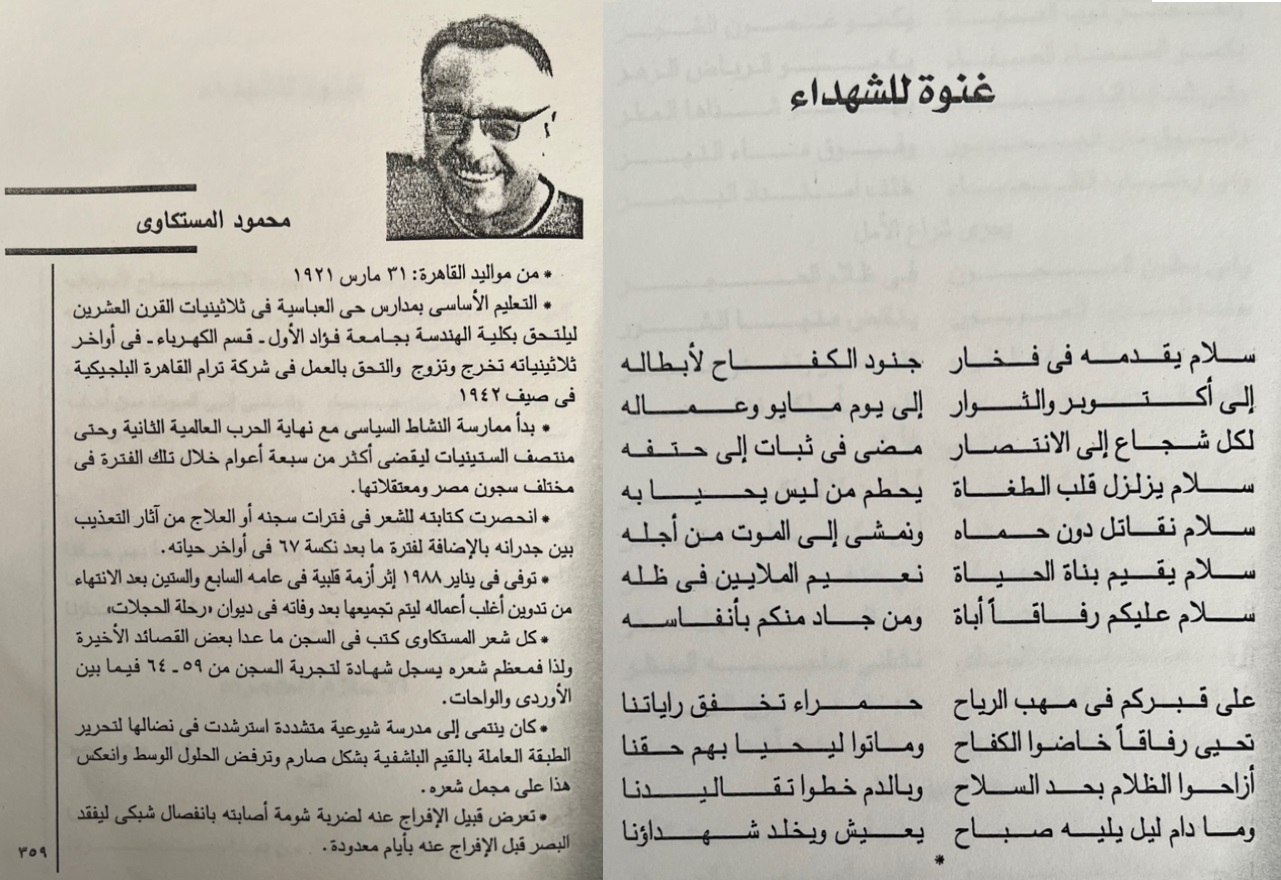
Derek’s MA research investigated the interaction between Egyptian Marxists and the Egyptian State under Gamal Abd Al-Nasser from 1952 to 1965. After the Free Officer coup of July, 1952, the new government launched a period of repression that targeted many political organizations, foremost among them Egyptian communists. Repression against the communists was interrupted during a brief interlude from mid-1956 until the end of 1958, when Nasser launched a second period of repression aimed at circumscribing the communist left during Egypt’s brief merger with Syria. Utilizing quantitative data of the communist prisoner population as well as qualitative first-hand accounts from imprisoned communists, this thesis reconstructs the conditions, demographics, and class status of the communists targeted by the repressive apparatus of the Egyptian state. It also explores the subjective response of the Egyptian communists and their ideological shifts vis-à-vis changing material and repressive conditions.
 Derek Ide, Ph.D.